
Letter From Lars-Eric Uneståhl
DEAR STUDENT!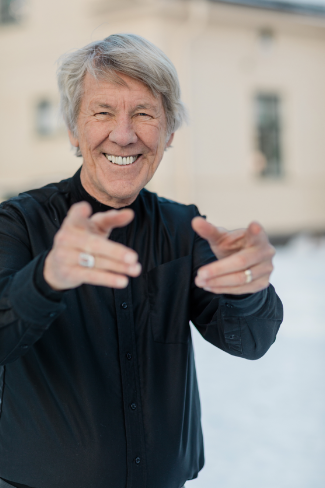
Lars-Eric Uneståhl would like to personally introduce you to the course with the following letter.
START AND HISTORY
I started the course in Sweden in September 1987 as a 20 “point” distance learning course at Örebro University. The agreement with the department of psychology and pedagogy was that I could start this new course if the course brought together 50 course participants. After a very short period of time over 500 students had signed up, and the course became the most popular course at the University. Initially, the name of the course was “Sports Psychology and Mental Training” but after one year was changed to “Personal development through Mental Training”. The reason for the change was mainly because many participants came from fields other than sports. A few years later the name was changed to “Personal Development through Mental Training”, UMT.
DISTANCE LEARNING
Distance learning is defined as education or training in which teachers and students are physically separated.
Modern technology such as platforms, data, etc., has made it possible to further increase the efficiency of this training form. When more and more people have access to computers, it is no longer necessary for any higher education to be held in the university building. The lectures are even more effective if they are recorded, so that they can be enjoyed at home, or at work, and at times decided by the course participant. The University comes home to everyone. At first, distance studies were carried out by correspondence. Canada and Australia began to use the radio, and in England the Open University offered education on BBC channels. However, here again the participants were stuck to lecture time that was decided by others. Instead, people bought a recorder, recorded the lectures, and viewed or listened to them when they had time. Based on these experiences, I find an educational model which was as flexible as possible and based on the participants’ needs.
VIDEO/DVD
Video and DVD became the natural solution. With Video (then) and DVD and now film online lessons, the students were able to determine the time and place of the lessons. The question was, however, if these were as effective as traditional lessons. What I found was that film lessons were actually more effective and made greater understanding possible.
Another thing that made the UMT training unique from the start was that the
emphasis was on skills training. In order to develop in professional and private
life, knowledge must be transferred to skills, and this is done through exercise,
application and training. Thus, skills training became an essential and important
part of UMT training.
VISION
SIU’s vision ”A better world through education and training” means reaching as many people as possible with the Mental Training.
YOU ARE THE HOST OF A BETTER LIFE
I am now humbly grateful to have had the privilege of working with a process-oriented change methodology, Mental Training, which has led to a better quality of life for many people. At the same time, I would like to emphasize however, that what happens depends on your input and not mine. Only you can change yourself. Many of the more than 8,000 people who have taken and successfully completed the UMT training course report that it is the best thing that has ever happened to them.
THE FUTURE OF EDUCATION
Research at Stanford University in the United States has shown that recorded lessons yield better results in terms of knowledge, than when the same lesson is provided live by the same teacher. These, for many, surprising results, speak for film online education as an important means of education.
Yes, but the interaction with others? Of course, it can be important, but unfortunately, reality shows that the university lectures in many countries allow for surprisingly little interaction. In addition, there is nothing to prevent studies using film lessons from including a great deal of interaction, through forming groups with other users, using Internet and intranets, etc. And remember, the most important interaction is between you and the people in your surroundings (family, work, friends, etc.). Distance learning provides more opportunities for such interaction.
COMPARISONS WITH OTHER COUNTRIES
Since the 1970s, I have often had the privilege of being a visiting professor at universities in other countries. I have had many good opportunities to compare the Swedish education system with the systems in other countries. I would like to mention a few things that have had significance in connection with the development of this course “Personal development through Mental Training”.
Although Sweden has had a comprehensive adult education system compared to many other countries, it has rarely set requirements for the further development of professional skills. In some other countries, however, in order for us to retain our positions as
teachers, doctors, psychologists, etc. we have to participate in continued education courses. This continued education for lifelong training, has to be combined with
work, family, friends, etc. Thus, it is better if the training comes to the participant, and not vice versa.
GAP BETWEEN THEORIES – PRACTICE
A problem that Sweden has in common with most other countries is the gap between theory and practice in education. This was the case at first, even for a subject such as sports psychology. Despite the fact that one of the main objectives of the emerging field of sports psychology was to help athletes and coaches to achieve better performance, the gap between theory and practice became so large in some countries that those who participated in sports’ activities lost interest in sports psychology.
In this instance, Sweden has been something of a pioneer as we based education and training on the needs and issues that existed in the field of sports. Mental Training is one such example. When the Mental Training techniques developed in the seventies, I had the privilege of doing this in close cooperation with a number of different sports federations.
However, many in Sweden, as in other countries, have complained about the gap between theory and practice with regard to academic studies. Within industry there has been widespread skepticism in regard to what we teach at our colleges and universities. Many years ago, in the USA for instance, Mark H. Mc Cormack wrote a book entitled: What They Don’t Teach You at Harvard Business School. However, I believe that this criticism of our education system is more an effect of how we teach, than what we teach.
EDUCATION FOR A BETTER LIFE
There are almost no studies that can show a clear, positive correlation between school/college transcripts and success in life, and this is independent of how we measure “life success” (career, wealth, happiness, etc.) Traditional, education has not focused on skill training with the objective of changing/developing ourselves, and this has created a gap between school/university goals (knowledge) and life goals (competence).
PERSONAL-COACHING
From the mid 1990s, ”the new coaching” spread throughout the world at an explosive rate. As many of the basic principles are the same in coaching and Mental Training, I started to organize 10-credit courses in coaching at Uppsala University in the 1980s. At first, participants were mostly from the field of sports, but in the 90s more and more participants came from other areas of society. After the turn of the century, our coaching education became a part of the new international society ICC – International Coaching Community. The interaction between Coaching and Mental Training developed, and Mental Training became a part of coaching and “self-coaching” became an important part of Mental Training.
COMMON PRINCIPLES IN COACHING AND MENTAL TRAINING
· Future oriented
· Goal oriented
· Solution focused
· Resource based
· Process- and experience-oriented
· Learning by doing – Action learning
CLASS A) OR CLASS B) EDUCATION
A question I often receive is: Is this system especially for people who for practical reasons (work, family, etc.) have difficulty in coming to a university? The answer is yes, but with an important addition. If you just see our education as a substitute for regular university education, it can easily be perceived as a B education, a surrogate for the real training. Let me therefore mention some other advantages of our kind of education.
I would like to suggest that perhaps our education is the “real” education/training, and that traditional education is actually the surrogate.
THE GOAL OF EDUCATION
The goal of education is “personal development” (Swedish Law for Higher Education Section 2).
It means that knowledge is not enough. The important thing is a positive change in our way of thinking, reacting, doing things, etc. In the context of an investigation at the end of the 70s, I found that the effect of traditional courses was minimal when I investigated the results three to six months after the course, even after courses that were given a very positive rating after their conclusion.
Looking for reasons, I found 21 obstacles to change and development.
As a consequence of this, I set up three goals for my work:
– To try and create lasting positive change (development)
– To work holistic with the entire human being
– To design education directed to – and suitable for – all human beings
As traditional education imparted knowledge, but life required competence (how we handle and cope with the life situations we encounter) it was important to transfer knowledge to skills through practice, Applications and Training (The “PAT-principle): I will also introduce a direct path to “skills” which does not require knowledge as a first step. These experiences and ideas have formed the basis for the development of this course.
FINALLY
I would like to say that I am very happy and grateful for the high marks that UMT training has received during the more than 20 years that it has existed. It is incredibly exciting to read about the revolutionary changes that many students report.
As SIU’s vision is ”A better world through education and training” and our coaching vision (ICC) is “Coaching the world” it is with great joy and satisfaction that I welcome the UMT education into the English language – Unestahl Mental Training®
With these words, I would like to Welcome you to the UMT®!
Lars-Eric Uneståhl
Ph.D., Prof. and Examiner
Unestahl Mental Training
Tel: + 46 (0) 768907070
Email: info@mentaltraining.com
CV Lars-Eric Uneståhl
Lars-Eric Uneståhl, Ph.D. is the Founding President for the Scandinavian International University, in Örebro, Sweden. Uneståhl has been conducting research about – and developing principals and programs for – Personal- Team – Organizational and Leadership development through Mental Training since the 1960s.
The goal has been to develop practical training programs to obtain Excellence in:· Sports and Performing Arts
· School and Education
· Business
· Health and Wellbeing.
Uneståhl started the Swedish model of Mental Training (IMT-Integrated Mental Training) in 1969, after 10 years of research regarding ”alternative states of consciousness” and ”mind body issues” at Uppsala University.ELITE
During the 70s he developed the practical training programs together with the Swedish National and Olympic Teams. At the 1976 Olympics in Montreal, he was the only sports psychologist and mental trainer in the Olympic Village. During the 70s and 80s, Uneståhl was invited to introduce the ”Swedish model” to many countries around the world including, Australia, Brazil, Canada, China, Japan, Korea, US and many countries in Europe.MENTAL TRAINING IN SWEDISH SCHOOLS
A number of studies started in 1975 to investigate the effect of Mental Training in the field of education from preschool to high school levels. After six years of research with surprisingly good results, it became part of the national curriculum. This also created international attention, and Uneståhl was, for instance, invited as a visiting professor to Flinders University to introduce the Swedish model in 80 South Australian schools.
MOST AREAS OF SOCIETY
During the 1980s the application areas of Mental Training were enlarged to include most areas of society, work, business, relationships, etc. Over 50 % of the 100 largest Swedish International companies have used Mental Training in some form.
Another important area of application became the field of health with programs for behavioral change like, e.g., stopping smoking, weight regulation, sleep improvement, and for emotional control like phobias, anxiety disorders and various stress reactions. IMT was also used as a ”complementary medical method” in areas like cancer, preparation for giving birth, preparation for – and post-effects of – surgery, recovery after sports’ injuries, etc. IMT was also shown to be effective in the treatment of tinnitus and chronic pain.
Mental Training became a university subject at Örebro University in the middle of the 80s. The course, whose acronym is” PUMT ”(Personal Development through Mental Training) quickly, became the most popular course at the university with over 2000 participants between 1987 and 1990. When Uneståhl started his private university (SLH/SIU) in 1990, PUMT together with the next course ”Personal, Team, and Leadership Development through Mental Training” became the most popular courses at SLH as well.
Up to 2010, these two courses have been given to many thousands of participants in Swedish.MENTAL TRAINING FOR ALL AGES
As training programs for personal development, Health and Wellbeing has also been available (for instance through Swedish pharmacies) for people who did not take courses, several hundreds of thousands of Swedish people have come into contact with Mental Training from preschool programs to special programs for seniors.1960s
Uppsala University: Subjects: Psychology, Sociology, Pedagogic, Anthropology, Religion, Theoretical and Practical Philosophy, License as a clinical Psychologist, Ph. Lic. and Ph.D. degrees.1970s
Head of the Department for Clinical and Experimental Hypnosis at Uppsala University.
Psychologist at reformatory schools (youth detention centers), Prisons, National Health Board, etc.
General Secretary for the ”VII World Congress of Hypnosis and Psychosomatic Medicine”.1980´s
President for the World Congress of Sport Psychology, Copenhagen 1985.
Visiting professor at the University of California, Long Beach.
Distinguished Scholar at Flinders University in Australia.
Visiting professor at the University of Hawaii, Honolulu.
Associated professor at Örebro University.
Board Member of ISH – International Society of Hypnosis.
Board member of ISSP – International Society of Sport Psychology.
Founding President for the International Society for Mental Training and Excellence.
Org. Committee for VII World Congress of Sport Psychology, Singapore, 1989.
1990´s
Founding President for Scandinavian International University – SIU.
President for 1st World Congress for Mental Training and Excellence.
Professor in Applied Psychology and Mental Training.
Member of the ”Baltic Academy of Science” in Russia.
Teaching in Universities in Australia, Brazil, Canada, China, Denmark, England, Finland, France, Germany, Hong Kong, Indonesia, Italy, Norway, Russia, Singapore, Spain and the United States.
Invited speaker to over 40 International and World Congresses.
A large number of research reports and articles.
21 books (8 in English).
Arthur Shapiro’s reward for the best book about hypnosis.